
Article 1 | 6-8 minute read
The Seed and the Sower
The Word carries a future, but the heart must receive it.
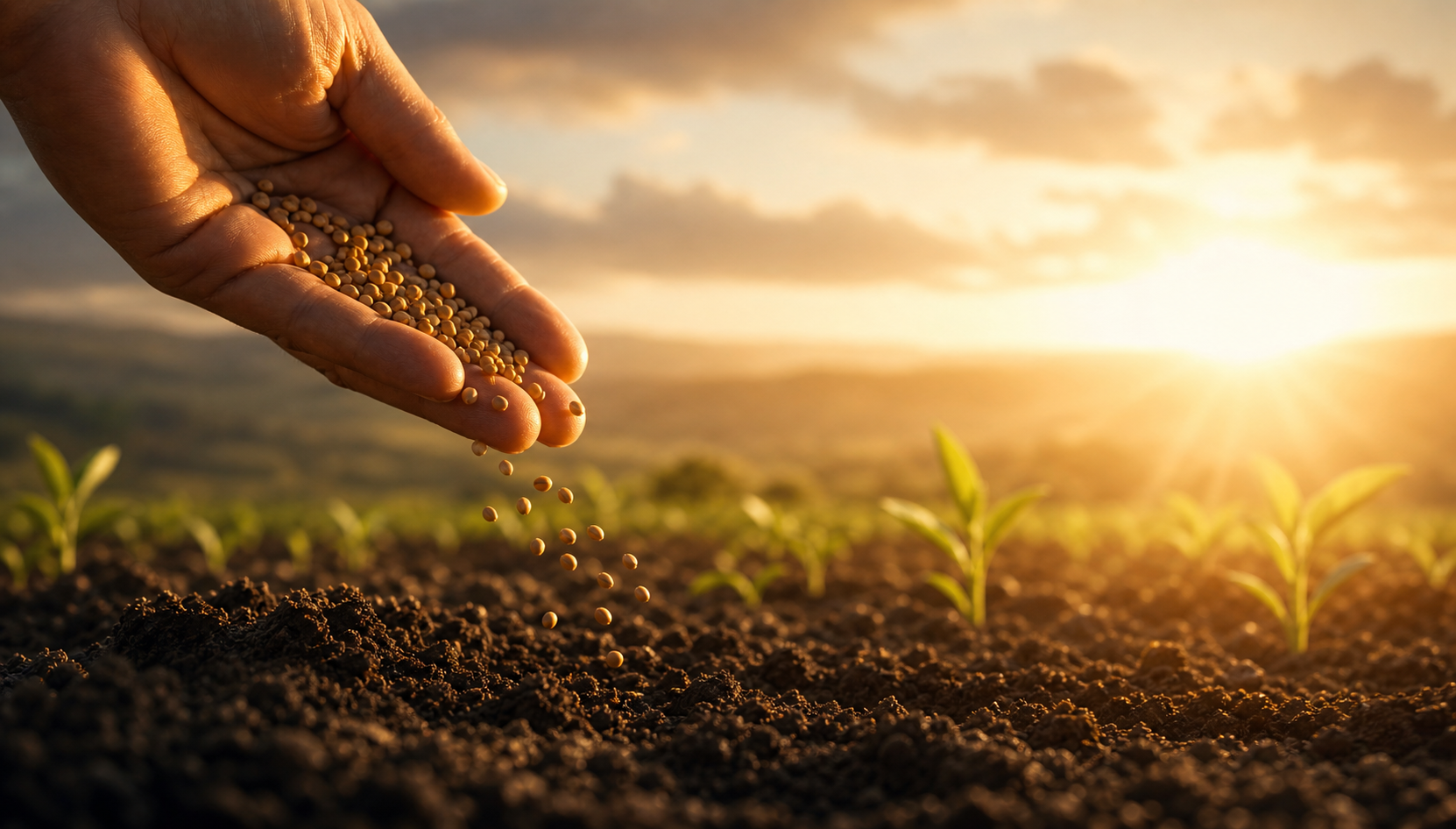
Jesus did not begin this parable with a building, a platform, or a crowd. He began with a field. "A sower went out to sow" (Mark 4:3 NKJV), and in that simple picture Jesus revealed something profound about the Kingdom of God. Heaven often begins with seed. Small beginnings. Hidden beginnings. Things easily overlooked by the natural eye.
Yet within a seed is an entire future waiting to emerge.
When Jesus later explained the parable to His disciples, He said plainly, "The sower sows the word" (Mark 4:14 NKJV). The seed is the Word of God. Every word that proceeds from God carries life within it. It carries promise, correction, wisdom, faith, direction, conviction, and the power to produce what God intends.
The Word is never empty.
Isaiah declared, "So shall My word be that goes forth from My mouth; It shall not return to Me void, But it shall accomplish what I please" (Isaiah 55:11 NKJV). Every word from God carries within itself the ability to accomplish something far greater than what first appears on the surface.
The striking part of the parable is that the seed itself never changes. The same seed falls on the wayside, on stony ground, among thorns, and on good ground. Heaven is not distributing inferior seed to some and better seed to others. The difference is not in the seed. The difference is in the soil.
This is why the condition of the heart matters so deeply.
Jesus begins with the wayside soil. "And it happened, as he sowed, that some seed fell by the wayside; and the birds of the air came and devoured it" (Mark 4:4 NKJV). Later He explains, "These are the ones by the wayside where the word is sown. When they hear, Satan comes immediately and takes away the word that was sown in their hearts" (Mark 4:15 NKJV).
Notice how quickly the battle begins.
The warfare begins at the point of hearing. Before the Word has time to take root, the enemy moves through distraction, unbelief, offence, confusion, and forgetfulness to steal what was spoken.
A sermon can be heard but never received.
A promise can be spoken but never planted.
Truth can pass through the ears without ever reaching the heart.
We live in an age overflowing with noise. Endless voices compete for attention every single day. Notifications, opinions, fears, entertainment, social pressures, and constant information bombard the mind until stillness itself becomes rare.
Yet the Word requires more than exposure. It requires reception.
James wrote, "Therefore lay aside all filthiness and overflow of wickedness, and receive with meekness the implanted word, which is able to save your souls" (James 1:21 NKJV). The Word must move beyond the surface. It must become implanted.
The wayside heart becomes hardened over time. Sometimes through disappointment. Sometimes through repeated discouragement. Sometimes through pride, pain, familiarity, or delay. A person can sit under truth for years while inwardly remaining untouched by it.
But even hardened soil can be broken open.
God knows how to soften hearts that life has made resistant. There are moments where worship suddenly becomes real again. A scripture pierces deeper than before. Conviction awakens. Hunger returns. Tears come unexpectedly in His presence.
Rain softens hardened ground.
Then Jesus speaks of the stony ground. "Some fell on stony ground, where it did not have much earth; and immediately it sprang up because it had no depth of earth" (Mark 4:5 NKJV). At first, everything appears successful. There is immediate response. Immediate growth. Immediate excitement.
But beneath the surface there are no roots.
Jesus explains, "These likewise are the ones sown on stony ground who, when they hear the word, immediately receive it with gladness; and they have no root in themselves" (Mark 4:16-17 NKJV).
This speaks to the danger of shallow spirituality.
There are moments where people respond emotionally to God, yet never allow the Word to move deeply enough to transform the inner life. Inspiration is celebrated, but formation is avoided.
Yet roots matter.
A tree survives storms not because of what is visible above the surface, but because of what has been developed beneath it. Hidden roots sustain visible fruit.
Prayer develops roots.
Obedience develops roots.
Waiting develops roots.
Faithfulness develops roots.
Quiet surrender develops roots.
Paul prayed that believers would be "rooted and grounded in love" (Ephesians 3:17 NKJV). God is not merely producing emotional moments. He is producing people who can endure pressure without collapsing when seasons become difficult.
Jesus said that when "tribulation or persecution arises for the word's sake, immediately they stumble" (Mark 4:17 NKJV). Pressure reveals depth.
Difficult seasons expose whether the Word has merely inspired us or truly formed us.
Modern culture trains people toward immediacy. Instant answers. Instant success. Instant visibility. But the Kingdom of God often works slowly beneath the surface before anything becomes visible above it.
God forms roots before He reveals fruit.
Then Jesus speaks of thorny ground. "And some seed fell among thorns; and the thorns grew up and choked it, and it yielded no crop" (Mark 4:7 NKJV).
Notice carefully: the seed initially grows.
This is not barren ground. This is crowded ground.
Jesus explains, "Now these are the ones sown among thorns; they are the ones who hear the word, and the cares of this world, the deceitfulness of riches, and the desires for other things entering in choke the word" (Mark 4:18-19 NKJV).
Many people do not lose fruitfulness because they reject God. They lose fruitfulness because too many other things occupy the same inward space.
The modern world excels at producing crowded hearts. Endless striving. Endless comparison. Endless distraction. Endless worry about tomorrow.
Jesus warned in Luke 21:34 NKJV, "Take heed to yourselves, lest your hearts be weighed down with carousing, drunkenness, and cares of this life."
The heart was never designed to carry endless noise.
Not every thorn appears sinful. Some things look responsible, productive, and necessary. Yet even legitimate concerns can choke spiritual life when they dominate the inward man.
A crowded heart eventually becomes an unfruitful heart.
This is why Proverbs says, "Keep your heart with all diligence, For out of it spring the issues of life" (Proverbs 4:23 NKJV). Whatever continually occupies the heart eventually shapes the direction of life itself.
Sometimes God must clear the soil before He expands the harvest.
There are things we ask God to increase while He is first asking us what needs removing. Not every voice deserves permanent access to your spirit. Not every burden belongs in your heart.
Then Jesus speaks of good ground. "But these are the ones sown on good ground, those who hear the word, accept it, and bear fruit" (Mark 4:20 NKJV).
Good soil is not perfect soil. It is receptive soil.
A fruitful heart is a yielded heart. It remains teachable. It remains open. It allows God to speak again, convict again, strengthen again, and plant again.
There is strength in tenderness before God.
David prayed, "Create in me a clean heart, O God" (Psalm 51:10 NKJV). He understood that inward condition matters more than outward appearance.
Fruitfulness is never instant, but it becomes inevitable where the Word is received deeply. Seeds work slowly. Beneath the surface roots begin forming long before fruit becomes visible.
The Kingdom often grows quietly before it grows visibly.
God plants before He reveals.
He forms before He displays.
He develops inwardly before He manifests outwardly.
This parable carries both warning and encouragement.
The warning is that hearts must be guarded carefully. The encouragement is that soil can change. Hard places can be broken open. Shallow places can be deepened. Thorny places can be cleared.
No condition of heart is beyond the reach of the Master Farmer.
The prayer of the believer is not merely, "Lord, give me a word," but also, "Lord, make me good ground."
Because when the Word is planted deeply within a yielded heart, the seed begins to do what only God can do.
It brings forth life.